Best overall
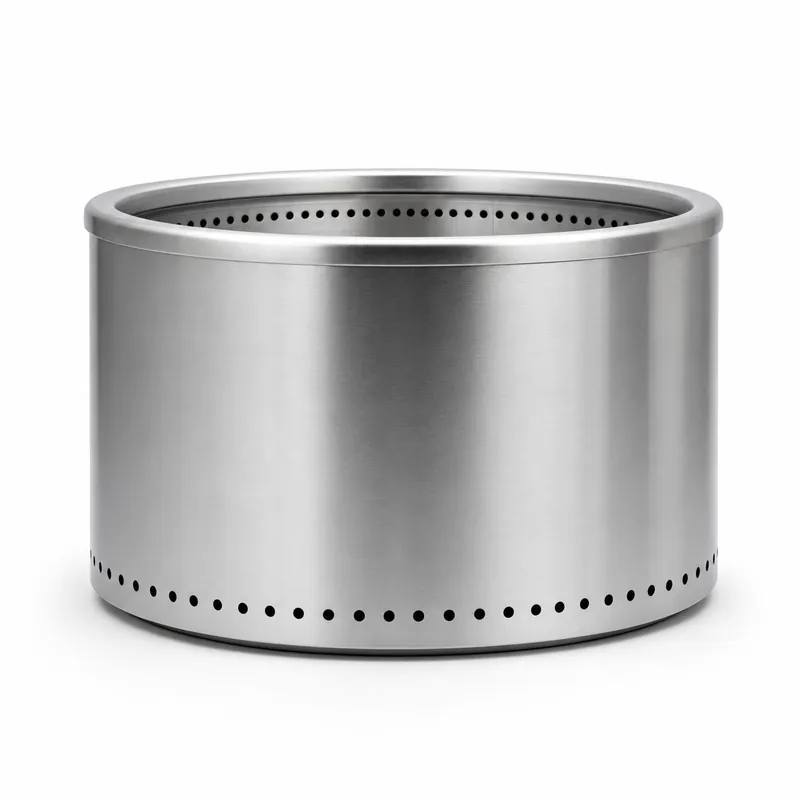
Solo Stove Bonfire 2.0
The right size for four to six people, with an ash pan that lifts out.
See it on amazon.co.uk*Buying guide
A smokeless fire pit burns wood twice: once in the fire and again at the rim, where preheated air ignites much of the smoke. The result is a hotter fire with far less smoke in your eyes – which matters on a patio where people sit close. Here is how to choose the size and the fuel, and the models we would shortlist.
For most patios, start with the Solo Stove Bonfire 2.0: 19.5 inches across, about 23 pounds, low smoke once it is hot and an ash pan that lifts out. Go bigger with the Solo Stove Yukon 2.0 (or, in the US, the Breeo X Series 24), smaller with the Ranger 2.0, and choose the BioLite FirePit+ if you want to grill over the fire. Whichever you pick, read the safety notes before the first evening.
Quick picks
Three fire pits that cover most patios, from a small terrace to a big backyard circle.
Best overall
The right size for four to six people, with an ash pan that lifts out.
See it on amazon.co.uk*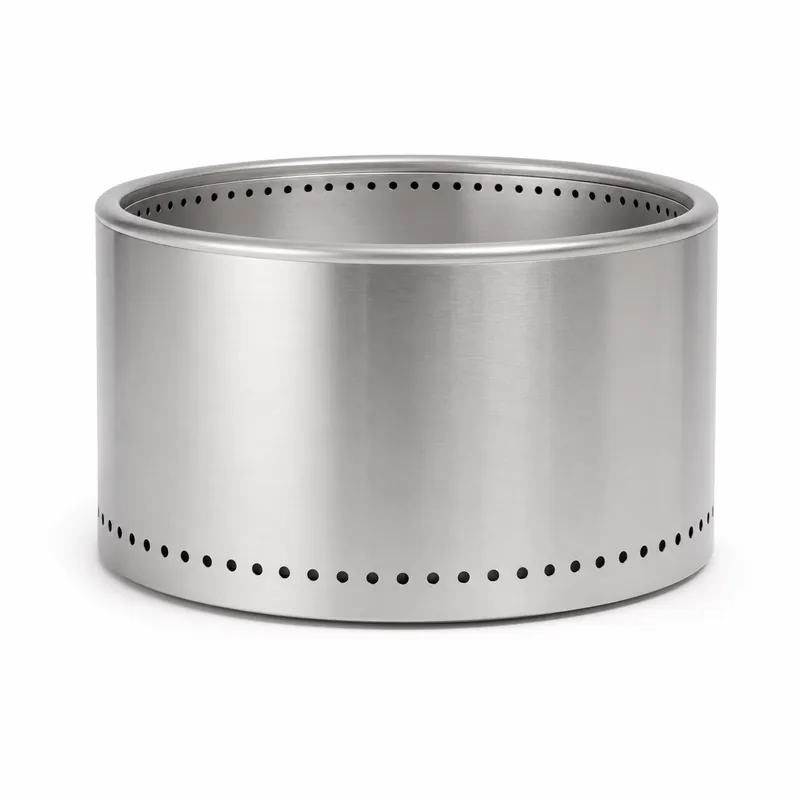
Best for big groups
A 27-inch fire pit for a wide circle of chairs.
See it on amazon.co.uk*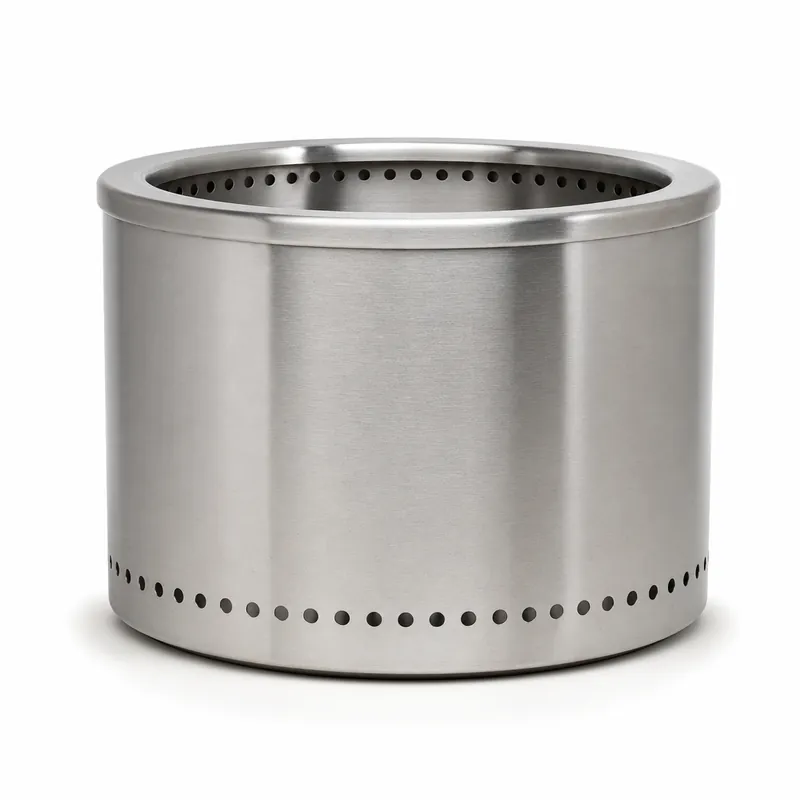
Best portable
Light enough to carry to the campsite or a beach fire ring.
See it on amazon.co.uk*What matters
Four things decide whether a fire pit gets used every weekend or waits under its cover.
Size it to the chairs, not the yard. For two to four people about 15 inches of fire is plenty; for four to six, around 20 inches; for more, 24 inches and up.
If you move the pit after every fire, keep it under about 25 pounds. Heavier steel holds heat and lasts, but it tends to stay where it lands.
Wood gives the crackle and the most heat. Gas gives a flame at the turn of a knob with no sparks or ash, and some places that restrict wood fires still allow it.
A removable ash pan means you lift out a tray once the ash is cold. Without one you scoop or vacuum, which is the chore people skip.
Our picks
Seven fire pits, each for a different kind of evening. Specifications come from the makers and specialist retailers; the trade-offs are under each one.
Best overall
Solo Stove · mid range
A good fit if you want one fire pit for a family patio and four to six chairs, with as little smoke as a wood fire allows.
Less so if you need to carry it far – it has no handles – or your deck has no room for the stand it needs on wood.
* Affiliate link. Details: Solo Stove Bonfire 2.0 – acehardware.com
Best for big groups
Solo Stove · premium
A good fit if you host bigger groups and want a fire that a wide circle of chairs can share.
Less so if you plan to move it often; at around 40 pounds it is a fire pit for one spot.
* Affiliate link. Details: Solo Stove sizes explained – gearpatrol.com
Best portable
Solo Stove · mid range
A good fit if you want a smokeless fire you can carry to the campsite or a beach fire ring, or your patio is small.
Less so if more than four people want to sit around it.
* Affiliate link. Details: Solo Stove sizes explained – gearpatrol.com
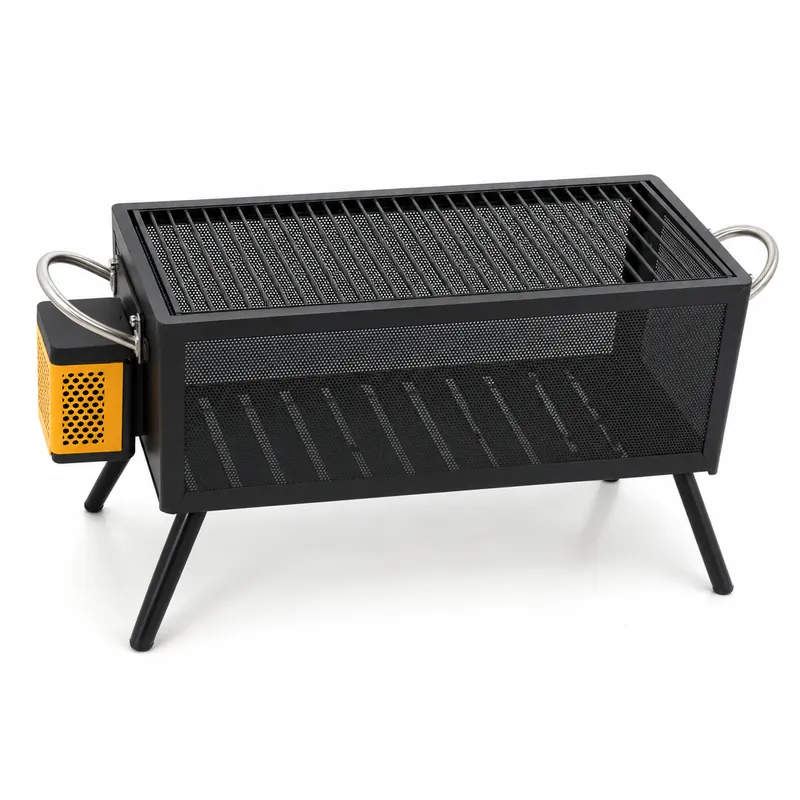
Best for cooking
BioLite · premium
A good fit if you want to grill over the fire, turn the flames up or down with a fan and control it from your phone.
Less so if you would rather not charge a battery before a fire, or you want a classic round bowl to gather around.
* Affiliate link. Details: BioLite FirePit+ – bioliteenergy.com
Most smokeless pits are double-walled steel cylinders. Air enters through holes near the base, feeds the fire from below and rises inside the hollow wall, where the fire heats it. It leaves through a ring of holes just under the rim, and that hot air ignites the smoke and gases rising from the logs – a second burn you can see as small jets of flame along the top. In OutdoorGearLab's comparison, this secondary burn helped the Solo Stove Bonfire 2.0 do the best job in the test group at taming smoke, even with less-than-ideal wood.
BioLite takes another route: a battery-powered fan pushes air through 51 jets into the fire, so you can turn the flames up or down. The gas option skips the question entirely – propane burns without smoke.
A fire that is just starting, burning wet wood or dying down will smoke like any other. Thick steel takes longer to heat: in OutdoorGearLab's review of the Breeo X Series 24, smoke was higher at the start than with thinner pits and crept back when the fire was not fed. Light it with dry kindling, add logs steadily and the smoke stays low.
| Group | Fire diameter | Models in this guide |
|---|---|---|
| Two to four | about 15 in (38 cm) | Solo Stove Ranger 2.0 |
| Four to six | about 20 in (50 cm) | Solo Stove Bonfire 2.0, Outland Cypress (gas); BioLite FirePit+ (a 27 × 13 in rectangle) |
| Six and more | 24 to 27 in (61 to 69 cm) | Solo Stove Yukon 2.0, TIKI Patio, Breeo X Series 24 |
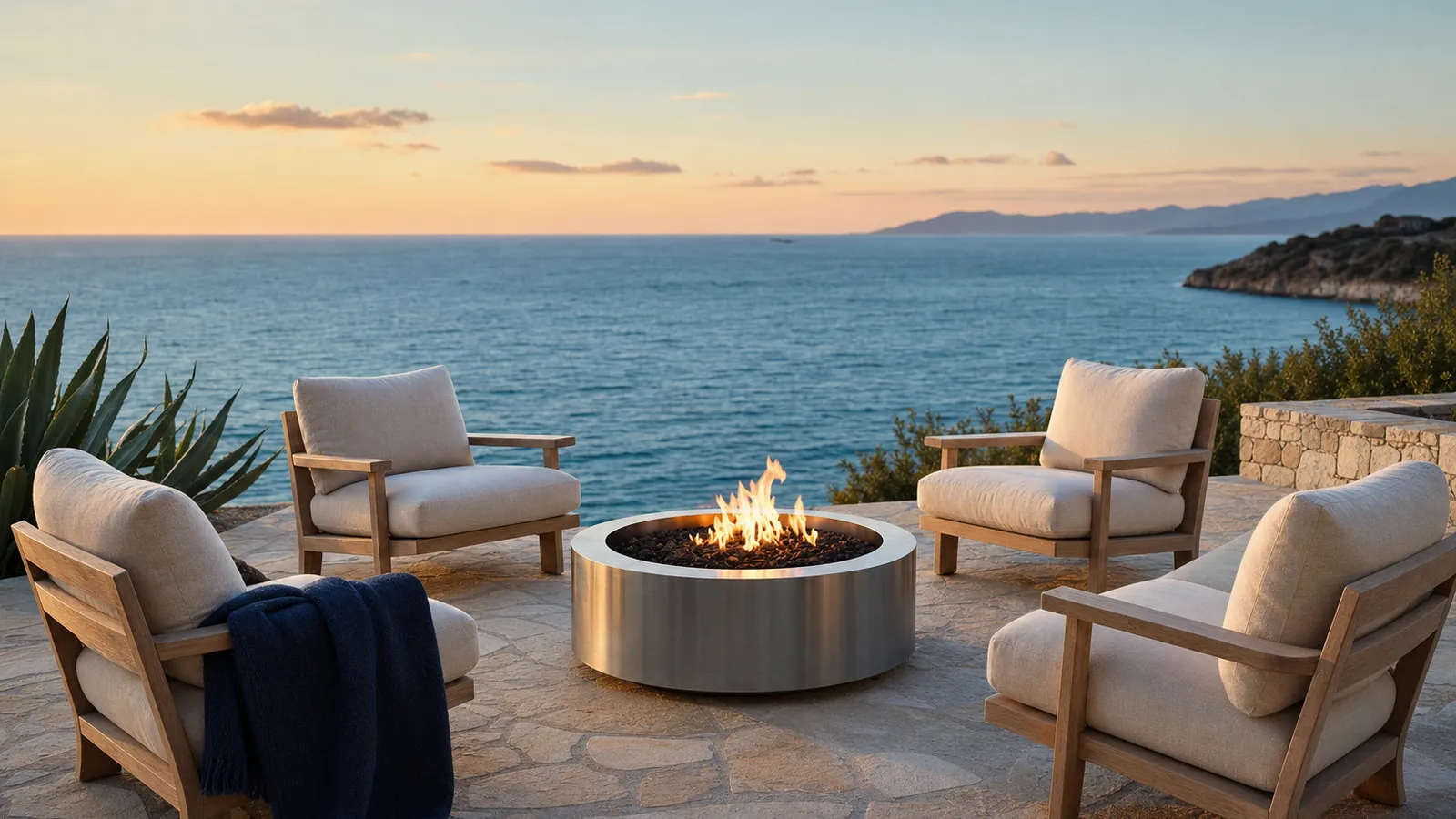
Leave room for a full circle of chairs at a comfortable distance from the heat, plus a path behind them. On a small terrace, a 15-inch fire with everyone close feels better than a big fire nobody can sit near. If you are still planning the space, the coastal patio ideas show where a fire pit fits best.
Wood is why most people want a fire pit: the crackle, the smell, the heat on your face. Burn dry, seasoned or kiln-dried hardwood such as oak, ash or beech, split to fit – OutdoorGearLab fitted logs up to 16 inches in the Bonfire 2.0 and up to 20 inches in the Breeo. Softwood and damp logs smoke and spark. Never burn painted, treated or pallet wood.
Pellets and charcoal work in some wood pits; the BioLite FirePit+ is made for both wood and charcoal, which is what makes it a good grill. Check the manual before you try pellets in any pit. Cooking over a fire pit is also how the Andalusian espeto works – sardines on a skewer, leaning toward the embers; our whole fish guide shows the method.
Gas gives you flames at the turn of a knob, no smoke, no embers drifting downwind and nothing to clean. It gives less radiant heat than a wood fire of the same size, but it runs long: in OutdoorGearLab's tests the propane pits had the longest burn times. Where wood fires are restricted, a gas fire pit is sometimes still allowed – check with your town, your building or HOA, or the campground.
Use a fire pit outdoors only – never in a garage, a closed porch, a tent or under a low roof, where carbon monoxide can build up. Set it on a non-combustible surface such as stone, pavers or the maker's stand, and keep clear space all around: Outland, for example, asks for 36 inches (91 cm) to the sides and 80 inches (2 m) above its gas firebowl, and a wood fire needs more room from walls, railings, hedges and umbrellas because sparks travel. Never leave a fire unattended, keep water or an extinguisher within reach, and put the fire out completely as the manufacturer describes; treat ashes as live until they are cold, and store them in a metal can with a lid. Check local rules before you light it: many towns restrict wood fires on windy days or during burn bans.
A deck needs a barrier between the fire and the boards. OutdoorGearLab notes that the Bonfire 2.0 needs its stand to keep it from burning a deck; Solo Stove sells a stand for each size, and a heat-resistant deck pad underneath adds a second layer. Composite and PVC decking can be less tolerant of heat than wood, so check what the decking maker allows. A gas fire pit throws no sparks, but it still needs a non-combustible surface below it.
From California to the Costa del Sol, many beaches ban fires on the sand or allow them only in marked fire rings – look up the rules for the exact beach before you pack wood. Wind is the other issue: light the fire with your back to the wind, keep it small and put it out early if gusts pick up. Never bury embers in the sand; they stay hot long after the fire looks dead. On a seafront terrace, stainless steel handles salt air well, while weathering steel such as Corten forms its protective rust layer best where it can dry out, so keep it covered.
We have not used these fire pits ourselves. We started with what matters on a coastal patio – smoke, size, weight, cleanup and how the steel copes with salt air – and compared the makers' specifications and retailer data with the independent tests published by OutdoorGearLab, which measured heat, burn time and smoke for the Bonfire 2.0 and the Breeo X Series 24. Then we chose one model per job and wrote down the trade-offs. Products appear only where your country's Amazon store sells them, so the list can be shorter outside the US. For the rest of the outdoor season, see Outdoor Living and the beach packing list.
They cut smoke sharply once the fire is hot, but a cold start, wet wood or a dying fire will still smoke. Dry hardwood and a fire that is fed steadily make the biggest difference.
Only on the manufacturer's stand or a heat shield, with clearance to railings and walls, and where local fire rules and your building or HOA allow it. A gas fire pit throws no sparks, but it still needs a non-combustible surface below it.
Dry, seasoned or kiln-dried hardwood such as oak, ash or beech, split to fit the pit. Avoid softwood, which smokes and sparks, and never burn treated, painted or pallet wood.
Only where the beach allows fires – many allow them only in fire rings, and some not at all. A small pit like the Solo Stove Ranger 2.0 is easy to carry; bring water to put it out and never bury the embers in the sand.
Specifications come from Solo Stove, Breeo, BioLite, TIKI and Outland Living, from their own pages or from specialist retailers; heat, smoke and burn-time observations come from OutdoorGearLab's published tests. We have not used these fire pits ourselves. We earn a commission on purchases made through our links; it does not change which models we list or what we say about them.
Our pick: Solo Stove Bonfire 2.0
Check price*