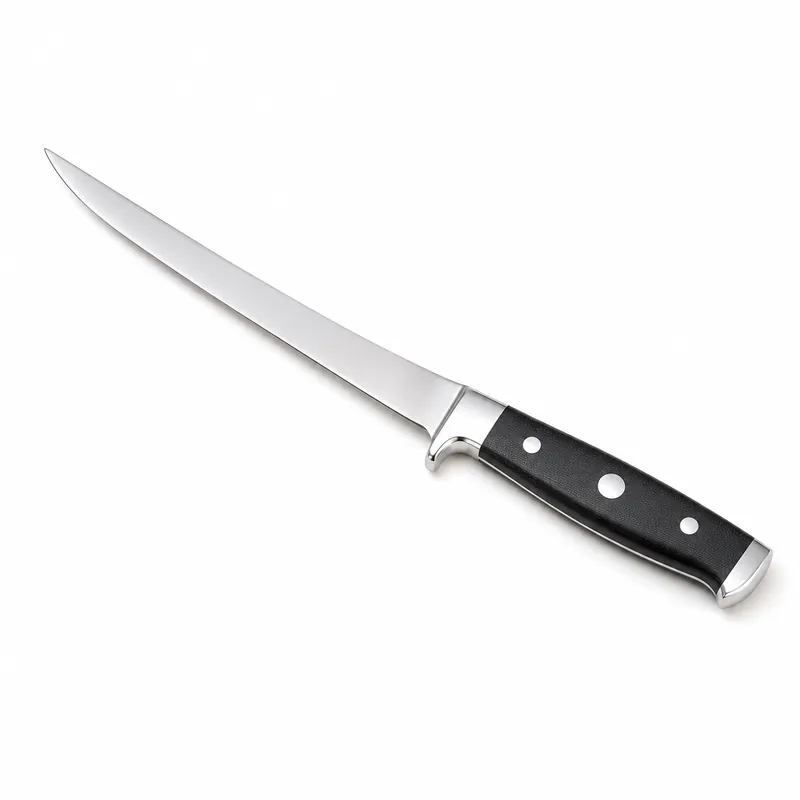
Best overall
Dalstrong Gladiator 7"
A flexible 7-inch German-steel blade, a G10 handle and two sheaths – the all-rounder for bream, bass and mackerel.
See it on amazon.co.uk*Buying guide
A good fillet knife bends along the backbone instead of tearing through it. The right one depends on the fish: a short, flexible blade for snapper and trout, a longer, firmer one for salmon and tuna. Here is what to look for, and the knives we would pick.
Best overall: the Dalstrong Gladiator 7-inch, a flexible German-steel blade with a G10 handle and two sheaths. Best value: the Swiss-made Victorinox Fibrox 8-inch. For the boat and the dock, the titanium-coated Bubba 7-inch Tapered Flex or the rubber-gripped Morakniv Fillet 155; for a whole cooler of fish, the cordless Bubba electric. Each model appears only where your country's Amazon store sells it.
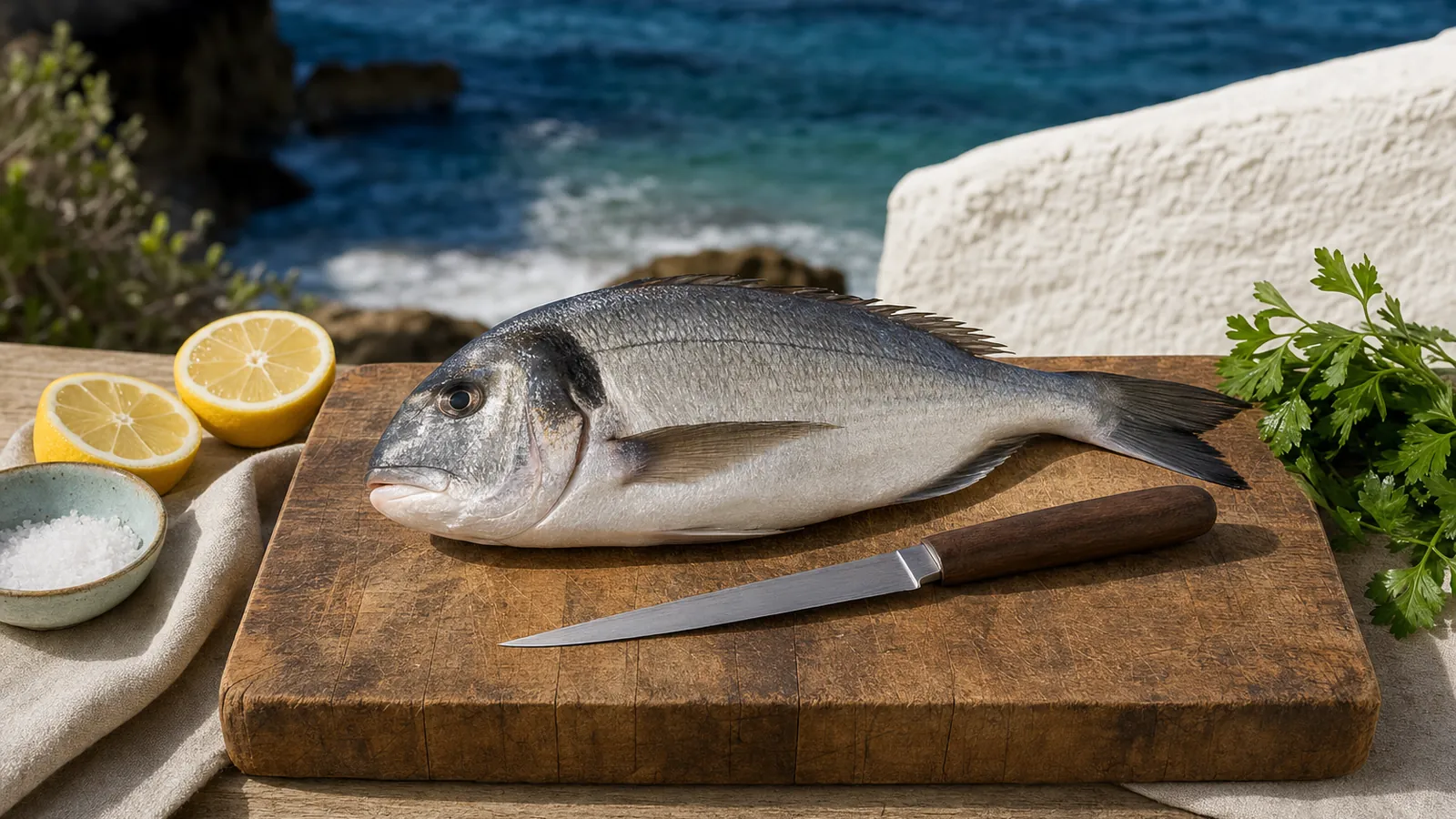
Quick picks
One for most kitchens, one for a small budget and one for wet hands on the boat.
Best overall
A flexible 7-inch German-steel blade, a G10 handle and two sheaths – the all-rounder for bream, bass and mackerel.
See it on amazon.co.uk*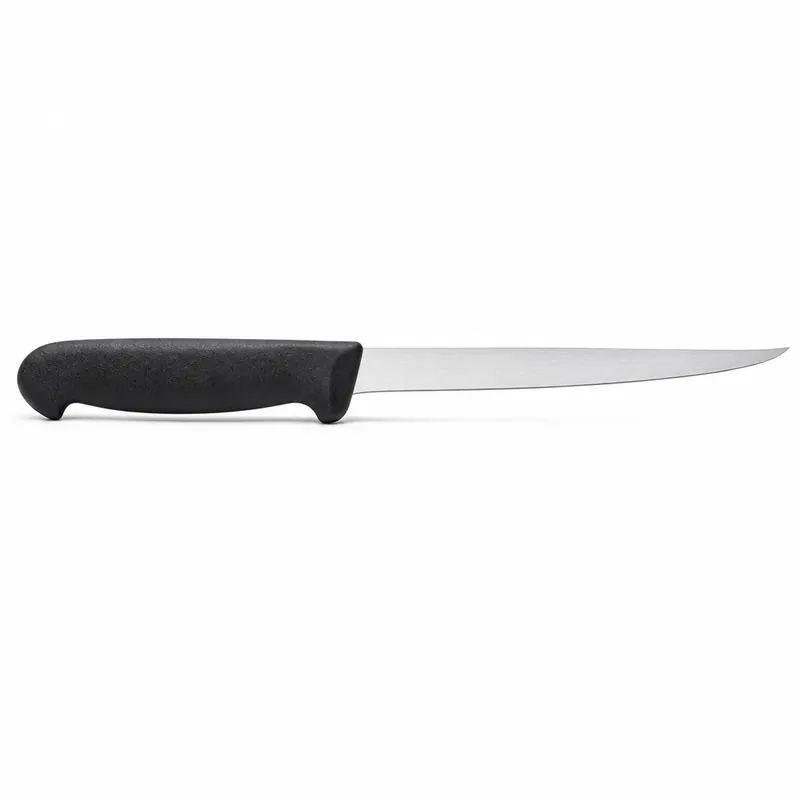
Best value
Swiss-made, light and flexible, with a non-slip handle and an 8-inch blade long enough for salmon.
See it on amazon.co.uk*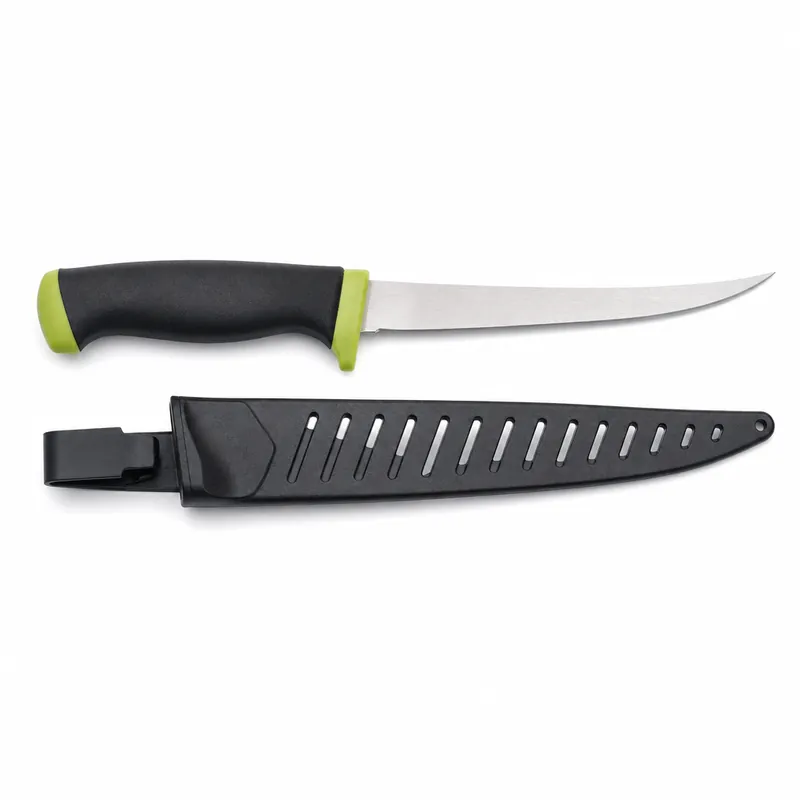
Best grip when wet
Swedish stainless steel, a rubber grip with a finger guard and a sheath that drains.
See it on amazon.co.uk*What matters
Four things decide whether filleting is a pleasure or a fight.
6 to 7 inches (15–18 cm) for sardines, mackerel, trout and bream; 8 to 9 inches (20–23 cm) for salmon and larger fish.
A flexible blade follows the backbone and ribs; a firmer one pushes through thick fillets and skin. Most home cooks want a flexible blade with a little backbone.
Stainless steel with a good hardness holds its edge and shrugs off salt water, as long as you rinse and dry it. Coatings add a second line of defense.
Fish is slippery. Textured rubber and a finger guard matter more than looks, especially with wet or cold hands.
Our picks
Each box lists the maker's figures and says who the knife suits and who it does not.
Best overall
Dalstrong · mid range
A good fit if you want one sharp, flexible knife for bream, sea bass, mackerel and trout, with a sheath for the drawer or the cooler bag.
Less so if you mostly break down whole salmon or large tuna – an 8- to 9-inch blade makes longer strokes easier.
* Affiliate link. Details: Dalstrong Gladiator Series Flexible Fillet Knife 7" – dalstrong.com
Best value
Victorinox · entry level
A good fit if you want a light, flexible blade long enough for salmon, without paying for looks.
Less so if you want a heavier knife with a forged look, or a sheath for travel – this one is light and purely practical.
* Affiliate link. Details: Victorinox Fibrox Filleting Knife, 20 cm – victorinox.com
Best grip when wet
Morakniv · entry level
A good fit if you want a light, inexpensive knife that stays secure in wet hands and a sheath that drains on the boat.
Less so if you fillet large salmon or tuna – the 6.1-inch blade is made for small and medium fish.
* Affiliate link. Details: Morakniv Companion Fishing Fillet 155 (S) – morakniv.com
Length is the first decision, and it follows the fish. A blade that is too short saws back and forth through a large fillet; one that is too long is clumsy on a sardine or a small trout. As a rule of thumb, the blade should be a little longer than the fillet is wide, so one long, smooth stroke lifts it from the bones.
| Fish | Fillets | Blade |
|---|---|---|
| Sardines, small mackerel, trout | Small and thin | 6 in (15 cm), very flexible |
| Sea bream, sea bass, snapper | From whole fish of about 1–2 lb (450–900 g) | 6–7 in (15–18 cm), flexible |
| Salmon, large sea bass, mahi-mahi | Long, thick at the shoulder | 8–9 in (20–23 cm), medium flex |
| Tuna, whole sides of salmon | Large loins | 9 in (23 cm) or more, firm – or electric |
If you buy one knife, 7 inches covers the fish most coastal cooks bring home: bream, bass, mackerel and snapper. Add an 8-inch blade if salmon is a regular on your table, and think about an electric knife only if you clean fish by the cooler-load.
Flex lets the blade ride over the backbone and around the rib cage, so less flesh stays on the frame. Too much flex, though, and the tip wanders in a thick salmon fillet or when you run the blade along the skin to remove it. Tapered blades, such as Bubba's, get thinner toward the tip, so they bend most where you work around bones and stay steadier near the handle. For round fish and careful rib work, choose flexible; for big, flat fillets and skinning, a little more stiffness helps. That is why the electric Bubba comes with both flex and stiff blades.
Stainless steel is stain-resistant, not stain-proof. Salt water, fish blood and a damp sheath will spot almost any blade if it is put away wet. The knives here use proven stainless steels – X50CrMoV15 at Dalstrong, Swedish 12C27 at Morakniv, 9Cr18MoV under a titanium-nitride coating at Bubba – and all of them stay bright with the same three habits: rinse in fresh water right after use, wash by hand, dry completely.
Coatings such as Bubba's titanium nitride add a barrier against rust and pitting, which helps on a boat where fresh water is scarce. Leather sheaths, like Rapala's, are handsome but hold moisture: after a fishing day, take the knife out and let both dry separately.
A fillet knife spends its life in slime, scales and cold water, so the handle matters more than it looks. Textured rubber, as on the Morakniv, the Victorinox Fibrox and Bubba's grip, stays secure in wet hands, and a finger guard keeps your fingers away from the edge when you push through skin. Wood and G10 feel good in a dry kitchen; on a wet deck, rubber wins.
Whole fish needs less knife work than fillets: scale, gut and slash, and it is ready for espeto-style grilling. Salmon fillets go straight onto a cedar plank. Either way, a squeeze of lemon and a good Spanish olive oil finish the job. More fish recipes and gear are in Barbecue & Grilling.
We started from the job – filleting the fish people grill by the coast – and set the criteria first: blade length, flex, steel and corrosion resistance, grip when wet, and what comes in the box. Then we read the manufacturers' specifications and, where a maker's page said little, the product pages of specialist fishing retailers and the trade press. We kept a spread of price ranges and checked which knives the Amazon stores in the US, the UK and Germany sell; a knife that your country's store does not sell does not appear on your version of this page. The Morakniv was long sold as the Fishing Comfort Fillet 155; Morakniv now lists it as the Companion Fishing Fillet 155. We have not used these knives ourselves, and we earn a commission on purchases through our links; it does not change what we recommend.
A 6- to 7-inch (15–18 cm) blade suits most panfish, trout, bream and snapper; choose 8 to 9 inches (20–23 cm) for salmon and larger fish.
Better not, even if the maker allows it. Rinse it, wash it by hand and dry it right away, especially after saltwater.
If you clean a lot of fish at once, yes; for a few fish, a manual knife is more precise.
Rinse it in fresh water as soon as you finish, wash and dry it by hand, and let a leather sheath dry separately. A thin film of food-safe oil helps before longer storage.
No. For whole fish you only scale, gut and score, and a small sharp knife does that. A fillet knife earns its place when you take fillets off the bone – see whole fish, espeto style.
Blade lengths, steels, hardness, handle materials and box contents come from the manufacturers' pages, specialist fishing retailers and, for the Bubba electric knife, the fishing magazine On The Water. We compared them and checked availability in the Amazon stores of the US, the UK and Germany. We have not used these knives ourselves.
Our pick: Dalstrong Gladiator 7"
Check price*