Keeps teak golden
Golden Care Teak Protector
Water-based, with UV blockers: keeps new or cleaned teak honey-colored.
See it on amazon.com*Guide
Teak is the classic for coastal patios because its natural oils resist water, rot and insects. Left alone it weathers to a soft silver gray; sealed, it keeps its honey color. Good teak lasts for decades – but quality varies widely. Here is what to check before you buy, and how to care for it.
Buy solid teak with glued and pinned joints, substantial parts and stainless-steel hardware, and ask what a seller's “grade” means instead of trusting the letter – we found no common standard behind it. Then choose the color: let it weather to silver with a yearly clean, or clean it and apply a water-based protector at least once a year to keep it golden. Teak oil is the least practical finish outdoors.
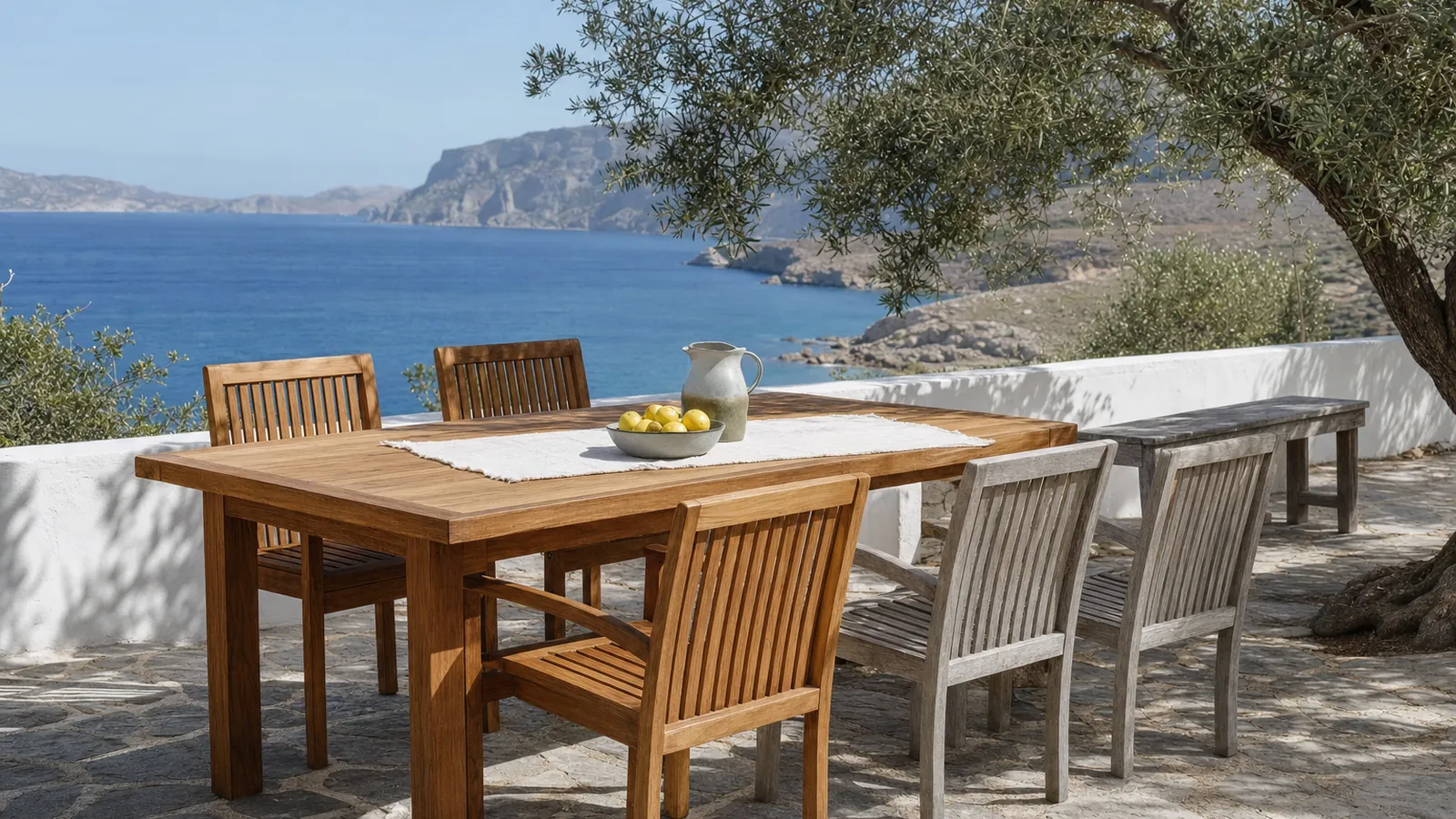
Teak (Tectona grandis) is a tropical hardwood rich in natural oils and resins. They make the wood resistant to water, rot and insects, keep it stable as humidity changes, and leave it smooth rather than splintery after years outside. That is why teak was used on ship decks long before it reached the patio, and why it suits a terrace that gets salt spray.
Teak does not need a finish to survive outdoors; a finish only changes how it looks. The furniture maker Westminster Teak puts it plainly: natural teak will last a lifetime untreated and weathered, and a finish is entirely a matter of preference.
Almost every teak seller talks about grades, and most describe them roughly like this:
The catch: as far as we could find, these letters are not a formal, standardized grade. On the retailer pages we read, “Grade A” appears as a product label without a definition, and none of them named a standard or an independent body that assigns it. One seller's A can be another's B. Treat the letter as a description, not a guarantee, and ask the questions that matter:
Solid heartwood teak is expensive because the tree grows slowly and only part of the trunk is usable. A set priced like acacia is unlikely to be heartwood throughout, whatever the label says. “Teak finish” or “teak color” describes a stain, not the wood.
Most new teak furniture is made from plantation teak, grown in managed forests in the tropics – Indonesia is a well-known source. Look for a certification you can check, such as FSC, and for a seller who says where the wood comes from. Young, fast-grown trees contain more sapwood and less of the dense, oily heartwood, which is one reason quality varies.
Reclaimed teak comes from old buildings, boats and furniture. It is often old wood with plenty of character – nail holes, saw marks, varied color – and it gives timber a second life. The trade-off is consistency: pieces differ, so check that the wood is solid and properly joined rather than patched together.
New teak is honey-colored. Outside, sun and rain gradually turn the surface a soft silver gray. This patina is only skin-deep – the wood underneath is unchanged – and many people prefer the weathered look by the sea.
| Option | Look | Upkeep |
|---|---|---|
| Let it weather | Silver gray | Clean once a year with mild soap and water, or a teak cleaner |
| Water-based protector | Keeps the original color and slows graying | Clean, let dry, two thin coats; Golden Care recommends at least once a year |
| Teak oil | Darker, amber tone | Wears off quickly outdoors and has to be reapplied often; Westminster Teak offers it as an indoor finish only |
Westminster Teak, which sells Golden Care products, says the water-based protector keeps teak's original color up to four times longer than untreated wood and lasts about six months to two years outdoors, depending on exposure. On a dining table, Golden Care's Teak Shield goes on top as a water-based barrier against food and drink stains. Don't seal teak that has already turned gray or that was oiled: clean it back first, then protect it.
Wash with mild soap, water and a soft brush, working with the grain. For gray or blotchy teak, use a teak cleaner: Golden Care's goes on wet wood, sits for about three minutes, is scrubbed with the grain and rinsed off. Wear gloves and eye protection, and cover the ground underneath.
If the cleaned surface feels rough, sand lightly by hand and remove all the dust.
Sealing damp wood traps moisture. New teak should weather for a week or two, or be cleaned, before the first coat of protector.
Shake and stir the protector well, test it on a hidden spot and apply thin, even coats, with a second coat once the first has dried.
Teak can stay out, but it stays cleaner under a breathable cover or in a dry shed. Avoid wrapping it in plastic sheeting, which traps condensation.
Rinse teak with fresh water after storms or spray, and check the hardware now and then – even stainless fittings last longer without a crust of salt.
| Material | Upkeep outdoors | Good to know |
|---|---|---|
| Teak | Yearly clean; sealing optional | Heavy and expensive; weathers to silver; the classic by the sea |
| Acacia | Oil regularly; store in winter | The teak look for less money, but less oily, so it needs more care |
| Eucalyptus | Oil or seal regularly | Light in color and price; happiest under cover |
| Cedar | Seal or stain | Light and naturally rot-resistant, but soft, so it dents more easily |
| Recycled plastic (HDPE) | Soap and water | Never rots or needs paint; comes in teak colors; heavy |
If you want the look of teak without the care, teak-colored recycled plastic is the practical choice – our Adirondack chair guide has examples. On a tight budget, acacia gives the warm wood look as long as you oil it and bring it in for winter.
Larger teak pieces and dining sets are mostly sold by specialist teak retailers and furniture stores rather than on Amazon. Specialists tend to state origin, drying and construction in more detail and can supply replacement parts – put the questions from the grade section to them before you order. Amazon is useful for care products such as cleaners and protectors.
Plan the space before you buy: a teak dining set wants room for the chairs to slide back and, by the Mediterranean, a little shade. Our coastal patio ideas help with the layout, and once the table is set, try whole fish, Andalusian espeto style. More pieces are in the coastal furniture section, and the modern coastal style guide shows how teak fits indoors too.
Matching products
For keeping teak golden – and three alternatives if you would rather not. Each appears only where your country's Amazon store sells it.
Keeps teak golden
Water-based, with UV blockers: keeps new or cleaned teak honey-colored.
See it on amazon.com*
Best cleaner
Brings gray, weathered teak back to its original color before you seal it.
See it on amazon.com*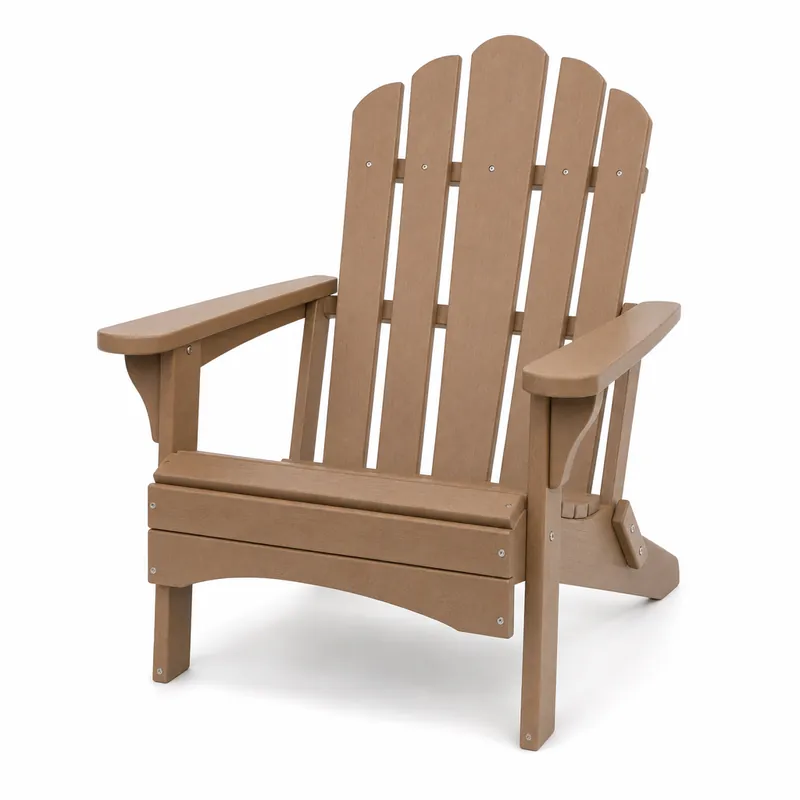
Best overall
Teak-colored recycled plastic that never needs oiling or sealing.
See it on amazon.com*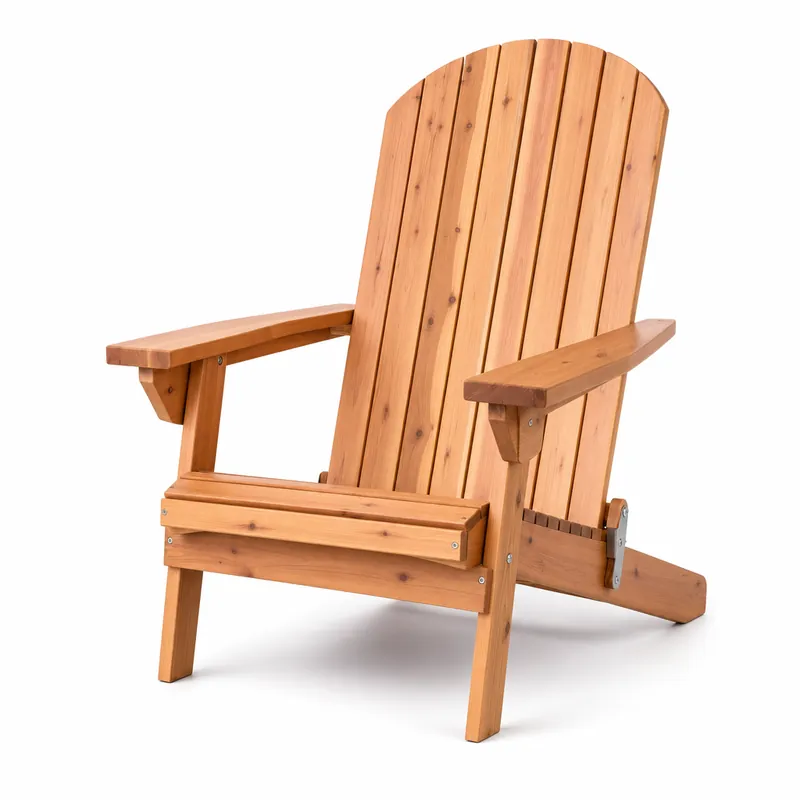
Best wood
Real wood for less: western red cedar that folds for winter.
See it on amazon.com*Oil darkens the wood and needs frequent reapplication outdoors; a water-based teak protector, or simply letting it weather, is easier.
High-quality teak can last decades with basic care: a yearly clean and, if you like, a protector.
It is a slow-growing tropical hardwood, and the best furniture uses dense, oily heartwood throughout, with careful joinery and stainless hardware.
No. The silver-gray color is surface weathering from sun and rain. A teak cleaner removes it if you want the golden color back.
We read the manufacturer and specialist-retailer pages for the care products and for teak furniture, including Westminster Teak's notes on finishes and Golden Care's application instructions. We have not used the products ourselves. On grades, we report how sellers use them and what we could not find: none of the pages we read defined Grade A or named a standard behind it.
Sources
Our pick: Golden Care Teak Protector
Check price*