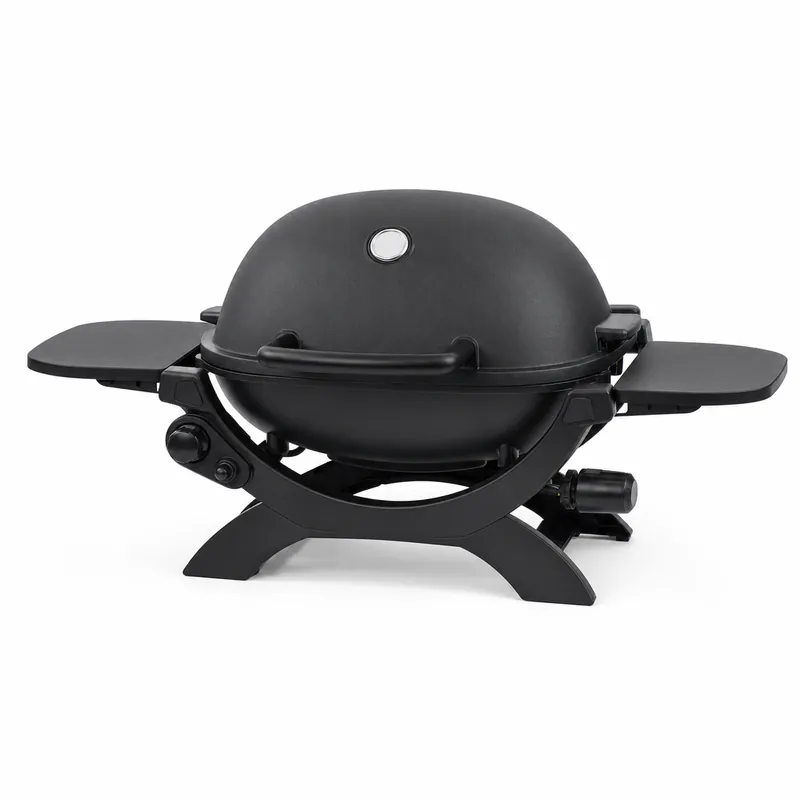
Best overall
Weber Q 1200
A lid that closes over the plank, steady gas heat and room for a fillet for four.
See it on amazon.com*Recipe
A cedar plank solves the two big problems of grilled fish: the fish never sticks, and it picks up a gentle, woody smoke. Soak the plank, bring the grill to medium heat and let the plank do the work.
Soak an untreated cedar plank for at least an hour, lay the salmon on it skin side down, brush on a lemon, Dijon and honey glaze and grill at about 400°F (200°C) with the lid closed for 15 to 25 minutes, depending on thickness. Don't flip it. USDA guidance for fish is 145°F (63°C) in the thickest part.
Grilled salmon has two classic problems: it sticks to the grate, and its edges dry out before the center is done. A soaked cedar plank solves both. The fish sits on wood, not metal, so nothing sticks and nothing falls through. The damp plank steams and smolders under the fillet, cooking it gently from below while the closed lid roasts the top, and the cedar adds a soft, woody aroma that suits a rich fish. The method comes from the Pacific Northwest, where cooking salmon on cedar has a long history, and it works on any grill with a lid.
Submerge the plank in water for at least one hour – longer for a thick plank or a hot grill – and weigh it down with a mug or a can so it stays under. Some cooks soak in salted water, white wine or apple juice; plain water does the job. A well-soaked plank smolders instead of burning, and that slow smoke is the point.
Whisk olive oil, Dijon mustard and honey with the zest and juice of a lemon, a little grated garlic, chopped dill, salt and pepper. The mustard holds the glaze on the fish, the honey caramelizes lightly under the lid, and the lemon keeps it fresh. Brush it on just before the salmon goes on the grill and keep a spoonful back for the table.
Before you glaze, run your fingers along the fillet against the grain and pull out any pin bones with tweezers or small pliers. Pat the fish dry so the glaze sticks.
Bring the grill to about 400°F (200°C), medium heat, with the lid closed.
Set the soaked plank on the grate and close the lid for a few minutes, until it starts to crackle and smell of cedar. Turn it over so the warm side faces up.
Lay the fillet skin side down on the plank, brush it with the glaze and close the lid.
Cook for 15 to 25 minutes, depending on thickness, without flipping. Check once or twice for flames at the edges of the plank and mist them with water.
Push a thermometer into the thickest part. USDA guidance is 145°F (63°C). Many cooks take salmon off at 125–130°F (52–54°C) for a silkier texture; that is below the USDA recommendation.
Move the plank to a heatproof board with gloves and serve the salmon straight from it, with lemon wedges and more dill.
A plank can catch fire at the edges, especially over high heat: keep the spray bottle within reach, keep the lid closed to starve flames of air, and never leave the grill unattended. Grill outdoors only – never in a garage, a tent or under a closed roof, because charcoal and gas produce carbon monoxide. Keep the grill well away from walls, railings and anything that burns, and on a balcony check first whether your building allows gas or charcoal. At the beach or in a park, follow the local rules on grills. Let the used plank cool completely, or douse it with water, before it goes in the trash.
On a gas grill, run the burners at medium and set the plank over them; on a larger grill you can turn off the burner under the plank once it smolders and cook with the others lit, for gentler heat. On charcoal, build a two-zone fire: toast the plank over the coals, then move it to the cooler side and close the lid. Charcoal adds a little more smoke; gas is easier to hold at 400°F. Both work, and so does a compact grill with a lid, such as the Weber Q 1200, for one plank and a fillet for four.
Sometimes. If it is only lightly charred, scrub it with hot water and no soap, which would soak into the wood, let it dry completely and use it again; the second round gives less aroma. Once it is charred through, cracked or smells burnt, throw it away. Planks are usually sold in packs, so most cooks treat them as a one- or two-time tool.
Serve the salmon with a tomato salad, crusty bread and a drizzle of olive oil, or with one of our easy Mediterranean meals. For smaller fish, try whole fish, espeto style; more recipes and gear are in Barbecue & Grilling.
Recipe
USDA guidance for fish is 145°F (63°C). Many cooks take salmon off at 125–130°F (52–54°C) for a silkier texture; that is below the USDA recommendation, and undercooked fish is not advised for pregnant women, young children, older adults or anyone with a weakened immune system.
Matching products
Any grill with a lid works. These have the room and the lid for a plank.
Best overall
A lid that closes over the plank, steady gas heat and room for a fillet for four.
See it on amazon.com*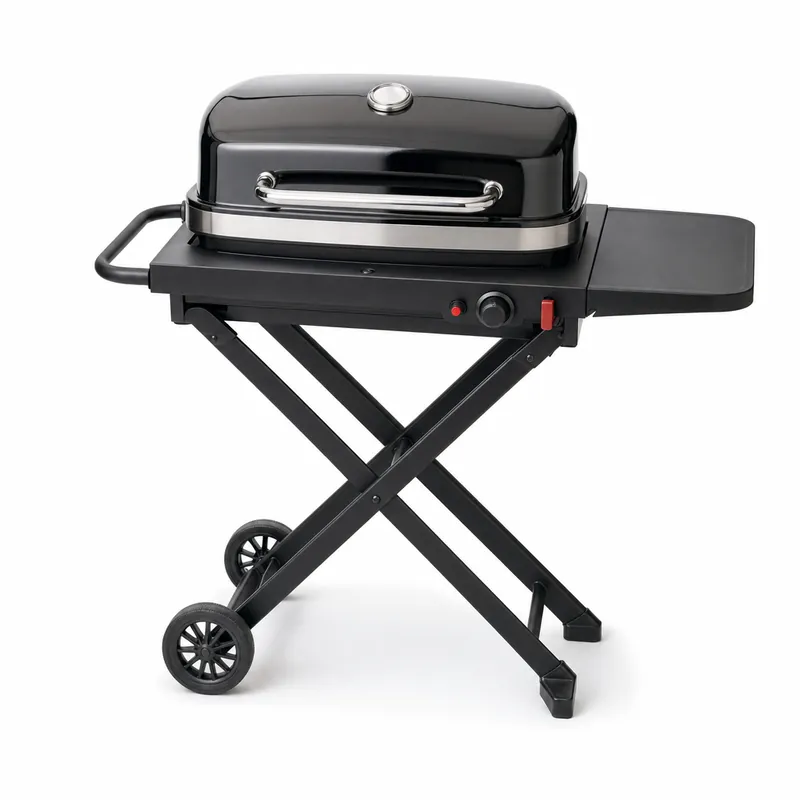
Best for groups
A larger cooking area for two planks when you cook for a group.
See it on amazon.com*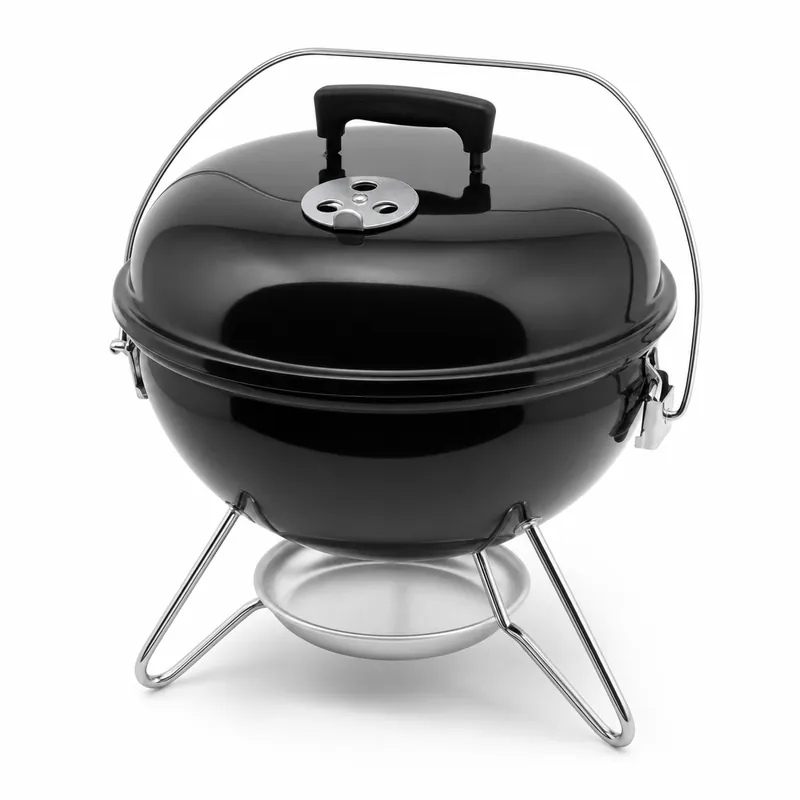
Best charcoal
Charcoal with room for two zones: toast the plank over the coals, then move it aside.
See it on amazon.com*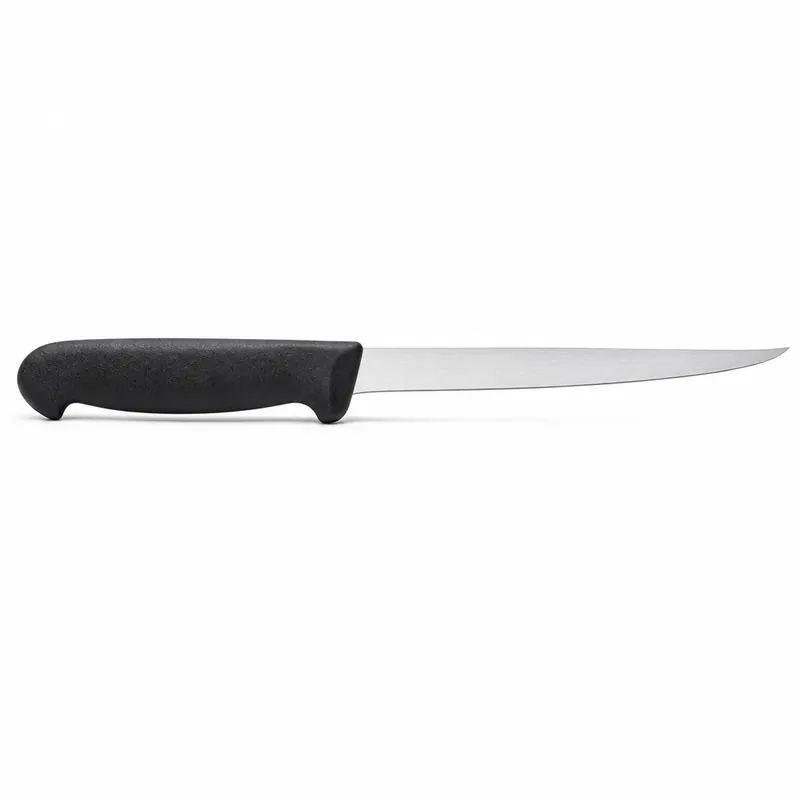
Best value
A long, flexible 8-inch blade for skinning and portioning salmon.
See it on amazon.com*At least one hour, longer for a thick plank or a hot grill.
No. The plank protects the bottom, and the closed lid cooks the top.
If it is only lightly charred, scrub it and let it dry; replace it once it is burned through.
USDA guidance for fish is 145°F (63°C) in the thickest part. Many cooks prefer salmon at 125–130°F (52–54°C), which is below the USDA recommendation.
This page presents the cedar plank method as it is widely practiced, with the safe internal temperature from USDA guidance for fish. Times are a guide, because grills and fillets vary. Grill and knife details come from the manufacturers' product pages.
Our pick: Weber Q 1200
Check price*