Best everyday
Graza Sizzle
Everyday Picual from Jaén in a squeeze bottle, made for the pan.
See it on amazon.com*Buying guide
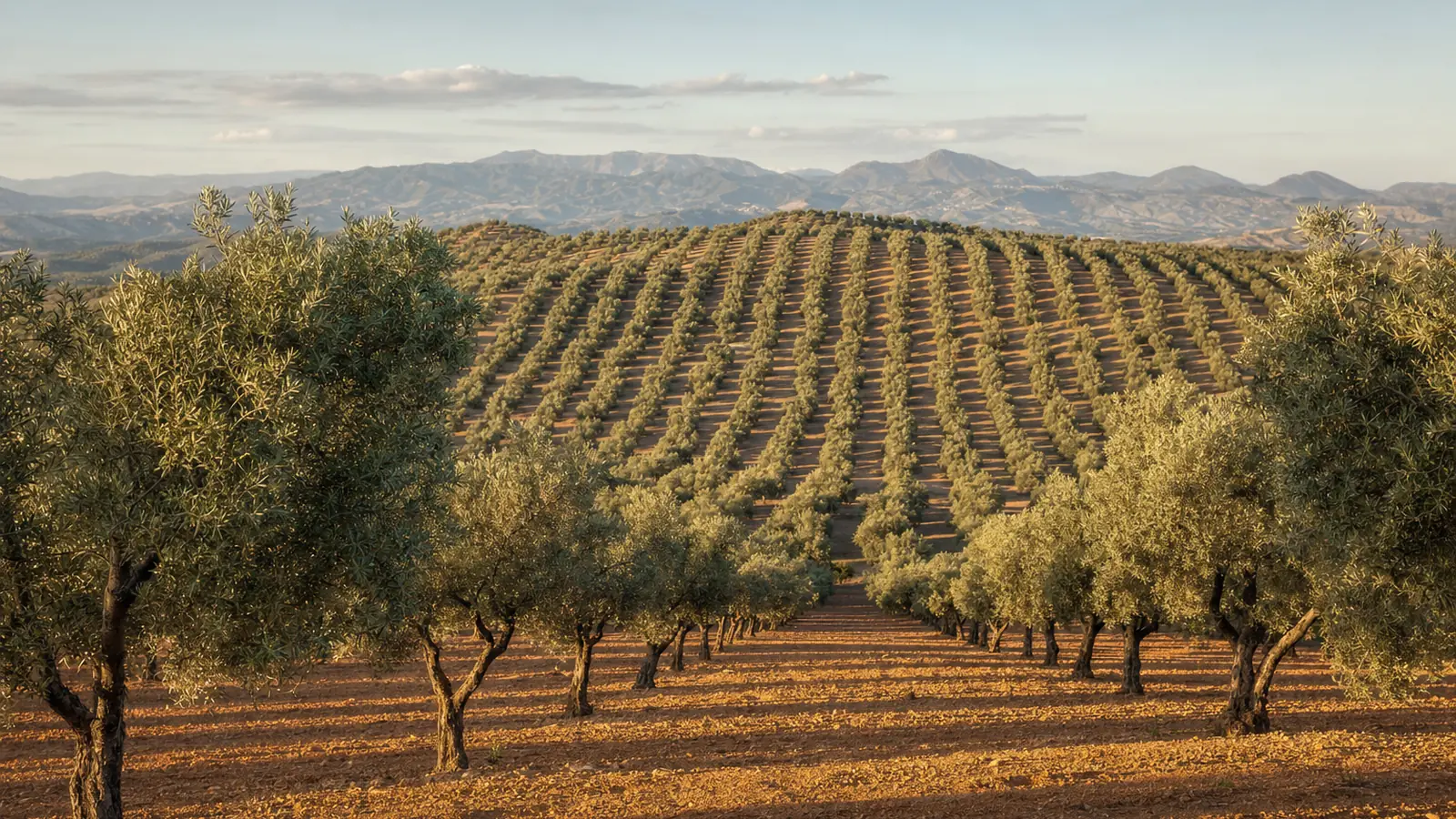
Spain produces more olive oil than any other country, and most of it comes from Andalusia, where the province of Jaén is covered in olive groves as far as you can see. Knowing three olive varieties – Picual, Hojiblanca and Arbequina – is enough to choose a bottle you will love.
Start with a Picual from Jaén: Graza for everyday cooking, Castillo de Canena Family Reserve Picual or Oro Bailén Reserva Familiar for drizzling. For a rounder, balanced oil, Oleoestepa Hojiblanca from the Estepa DOP; for a mild, buttery one, Castillo de Canena Arbequina. Venta del Barón, from the Priego de Córdoba DOP, is easy to find in the US, the UK and Germany.
Quick picks
One bottle per job, and one per variety.
Best everyday
Everyday Picual from Jaén in a squeeze bottle, made for the pan.
See it on amazon.com*Best Picual
The green, grassy, peppery Picual style at its most classic.
See it on amazon.com*Best Hojiblanca
A balanced DOP Estepa Hojiblanca for salads, fish and sauces.
See it on amazon.com*What matters
Spain grows many olive varieties, but three cover most of the bottles you will see, plus the blends made from them.
Green, grassy and peppery, with a hint of tomato leaf. The olive of Jaén: robust in the pan and bold over bread.
Fruity and balanced, with a light almond bitterness. The main olive around Estepa and in much of Córdoba province.
Mild, buttery and soft, with almond and apple. Originally from Catalonia, now planted across Spain; good for beginners and for baking.
Many oils mix varieties – Venta del Barón combines Picudo and Hojiblanca. A blend aims for balance rather than one variety's character.
Our picks
Six bottles from Andalusia, each with a clear job. Where a US specialist shop sells the same oil, you will see it next to Amazon.
Best everyday
Graza · entry level
A good fit if you want one big bottle by the stove that you pour without thinking twice.
Less so if you want a bold, peppery oil to taste on its own – that is what Drizzle is for.
* Affiliate link. Details: Graza Sizzle – graza.co
Best Picual
Castillo de Canena · premium
A good fit if you want a classic green, peppery Jaén oil for salads, tomatoes, ham and grilled meat.
Less so if you want a mild oil; for that, its Arbequina sister is the softer choice.
* Affiliate link. Details: Picual Family Reserve – castillodecanena.com
Best splurge
Oro Bailén · premium
A good fit if you want a showpiece finishing oil for salads, roasted vegetables, soups and aged cheese.
Less so if you want an oil for the frying pan; its fresh tomato notes are wasted on high heat.
* Affiliate link. Details: Oro Bailén Reserva Familiar Picual – Olive Oil Lovers
Best Hojiblanca
Oleoestepa · mid range
A good fit if you want one balanced oil that does everything from salads and grilled fish to sauces.
Less so if you want a very bitter, peppery oil; Hojiblanca sits in the middle, fruity and balanced.
* Affiliate link. Details: Oleoestepa Hojiblanca 750 ml – tienda.oleoestepa.com
Best mild
Castillo de Canena · premium
A good fit if you are new to good olive oil or want a soft oil for fish, mayonnaise and baking.
Less so if you love the bitter, peppery bite of a green Picual.
* Affiliate link. Details: Arbequina Family Reserve – castillodecanena.com
Best DOP oil
Mueloliva · premium
A good fit if you want a protected-origin finishing oil that is sold in the US, the UK and Germany.
Less so if you want a neutral oil for baking; this one has plenty of character.
* Affiliate link. Details: Venta del Barón, PDO Priego de Córdoba – Olive Oil Lovers
The International Olive Council calls Spain the world's first producer of olive oil. Within Spain, Andalusia dominates: regional figures for one recent season put it at about three-quarters of the country's output, and Jaén alone made more than 40 percent of Andalusia's oil.
Jaén is Picual country, with olive trees running over the hills to the horizon and a handful of estates – Castillo de Canena and Oro Bailén among them – that made Spanish oil a name among chefs. Further west, around Estepa and in the hills of Córdoba, Hojiblanca takes over. In Catalonia, Arbequina rules, from the Siurana DOP in Tarragona to the groves inland. Graza, the squeeze-bottle brand, also uses Picual from Jaén.
A Denominación de Origen Protegida (DOP, PDO in English) ties an oil to a defined area, approved olive varieties and production rules, checked by a regulatory council. These five are worth knowing; look for the name and the DOP seal on the label.
| DOP | Where | Varieties | Style |
|---|---|---|---|
| Sierra de Segura | 14 towns in the mountains of northeastern Jaén, at an average altitude of about 2,950 ft (900 m) | Picual, with Verdala, Royal and Manzanillo de Jaén | Fruity, aromatic, slightly bitter |
| Sierra Mágina | 14 towns in south-central Jaén, around the Sierra Mágina natural park | At least 90 percent Picual, with Manzanillo de Jaén | Very fruity, slightly bitter |
| Estepa | Seville province around the town of Estepa, plus a corner of Córdoba | Mainly Hojiblanca, with Arbequina, Manzanilla, Picual and Lechín de Sevilla | Green, early-harvest fruit with noticeable bitterness and pepper |
| Priego de Córdoba | Four towns in the Sierras Subbéticas of southeastern Córdoba | Picudo, Hojiblanca and Picual | Fruity and aromatic; a sweet entry for Picudo and Hojiblanca, light bitterness for Picual |
| Siurana | Tarragona province in Catalonia, from the Priorat to the coast | Arbequina, with Royal and Morrut | Greenish yellow, sweet and fruity |
Two of our picks carry a DOP: Oleoestepa Hojiblanca (Estepa) and Venta del Barón (Priego de Córdoba). A seal is a good sign but not the only one. Estate producers such as Castillo de Canena and Oro Bailén print their name, the olive variety and the harvest on the bottle, and that tells you just as much.
Spanish bottles sold abroad usually carry English, but the Spanish words on the back label are worth knowing:
Toast a thick slice of rustic bread, rub it with a cut clove of garlic, grate a ripe tomato on the coarse side of a box grater and spoon the pulp over. Finish with a generous pour of Picual or Arbequina and flaky salt. It is the Catalan pa amb tomàquet, eaten across Spain for breakfast and with tapas.
Córdoba's cold tomato soup is thicker than gazpacho. Blend ripe tomatoes with day-old bread, a little garlic, salt and a splash of sherry vinegar, then stream in olive oil until the soup turns creamy and orange. Serve it chilled with chopped hard-boiled egg and a thread of oil. A Hojiblanca or a soft Picual suits it well.
Over grilled sardines, sea bream or prawns, a raw drizzle of green Picual at the table does what a sauce would do elsewhere. Our Andalusian espeto guide shows the method on a home grill, and the easy Mediterranean meals use the same oils on weeknights.
Picual is the robust one for cooking: it keeps its character in a sofrito, under roasted vegetables and around fried eggs. Arbequina is better raw or in baking, where its softness is an advantage – Castillo de Canena even suggests it in place of butter in cakes.
We started with the varieties and the regions, then looked for bottles that name both, publish harvest information and are actually sold in the US, the UK or Germany – on Amazon or at Olive Oil Lovers, a US specialist shop. Facts come from the producers' pages, the Olive Oil Lovers listings and the official DOP specifications published by Spain's agriculture ministry, the Junta de Andalucía and the EU. We did not run tastings; tasting notes are the producers' and importers' own descriptions. Not every bottle is sold everywhere, so the selection you see depends on your country. For the basics of reading any olive oil label, see the olive oil guide; for more from the region, the Mediterranean kitchen.
Yes. Spain makes everything from everyday supermarket oil to some of the most sought-after estate oils; the styles differ by variety and region rather than by quality.
Picual: it is robust and holds up well to heat. Arbequina is better raw or in baking. For everyday cooking, a large bottle of Picual such as Graza Sizzle is a sensible choice.
Denominación de Origen Protegida, the Spanish form of the EU's protected designation of origin: the oil comes from a defined area and approved olive varieties and follows that region's production rules, checked by a regulatory council.
Picual is green, grassy and peppery, with a hint of tomato leaf; Arbequina is mild, buttery and almondy. If you are unsure, start with Arbequina for salads and baking and a Picual for the pan.
DOP areas and varieties come from the official specifications (MAPA, Junta de Andalucía, EU); market figures from the International Olive Council and regional data reported by Olive Oil Times; product facts from the producers and from Olive Oil Lovers. We have not run tastings or lab tests of our own, and this page makes no health claims: it is about taste and cooking.
Sources
Our pick: Graza Sizzle
Check price*